Biyernes, Oktubre 2, 2015

Parts of a Computer xx

Monitor- A monitor or a display is an electronic visual display for computers. A monitor usually comprises the display device, circuitry, casing, and power supply. The display device in modern monitors is typically a thin film transistor liquid crystal display (TFT-LCD) thin panel, while older monitors used a cathode ray tube (CRT) about as deep as the screen size. They are connected to the computer via VGA, DVI, DisplayPort, Thunderbolt, LVDS or other proprietary connectors and signals
Originally, computer monitors were used for data processing while television receivers were used for entertainment. From the 1980s onward.
Monitor's hostory: Early electronic computers were fitted with a panel of light bulbs where the state of each particular bulb would indicate the on/off state of a particular register bit inside the computer. This allowed the engineers operating the computer to monitor the internal state of the machine, so this panel of lights came to be known as the 'monitor'. As early monitors were only capable of displaying a very limited amount of information, and were very transient, they were rarely considered for programme output. Instead, a line printer was the primary output device, while the monitor was limited to keeping track of the programme's operation.
http://ecx.images-amazon.com/images/I/81FJa00A3yL._SL1500_.jpg


Mouse- is a pointing device that detects two-dimensional motion relative to a surface. This motion is typically translated into the motion of a pointer on a display, which allows for fine control of a graphical user interface.
Physically, a mouse consists of an object held in one's hand, with one or more buttons. Mice often also feature other elements, such as touch surfaces and "wheels", which enable additional control and dimensional input.The trackball, a related pointing device, was invented in 1941 by Ralph Benjamin as part of a post-World War II-era fire-control radar plotting system called Comprehensive Display System (CDS). Benjamin was then working for the British Royal Navy Scientific Service. Benjamin's project used analog computers to calculate the future position of target aircraft based on several initial input points provided by a user with a joystick. Benjamin felt that a more elegant input device was needed and invented a ball tracker called "roller ball", for this purpose.[5][6]
The device was patented in 1947,[6] but only a prototype using a metal ball rolling on two rubber-coated wheels was ever built[5] and the device was kept as a military secret.[5]
Another early trackball was built by British electrical engineer Kenyon Taylor in collaboration with Tom Cranston and Fred Longstaff. Taylor was part of the original Ferranti Canada, working on the Royal Canadian Navy's DATAR (Digital Automated Tracking and Resolving) system in 1952.

http://www.computershopper.com/var/ezwebin_site/storage/images/media/images/best-wireless-mice-hp-touch-to-pair-mouse/1102560-1-eng-US/best-wireless-mice-hp-touch-to-pair-mouse_400-Wide.jpg


Keyboard- s a typewriter-style device, which uses an arrangement of buttons or keys, to act as mechanical levers or electronic switches. Following the decline of punch cards and paper tape, interaction via teleprinter-style keyboards became the main input device for computers.
A keyboard typically has characters engraved or printed on the keys and each press of a key typically corresponds to a single writtensymbol. However, to produce some symbols requires pressing and holding several keys simultaneously or in sequence. While most keyboard keys produce lettersnumbers or signs (characters), other keys or simultaneous key presses can produce actions or execute computer commands.
 http://www.everythingusb.com/media/iogear-mini-wireless-keyboard-backlit.jpg


Central Processing Unit (CPU) - is the electronic circuitry within a computer that carries out the instructions of a computer program by performing the basic arithmetic, logical, control and input/output (I/O) operations specified by the instructions. The term has been used in the computer industry at least since the early 1960s.[1] Traditionally, the term "CPU" refers to a processor, more specifically to its processing unit and control unit (CU), distinguishing these core elements of a computer from external components such as main memoryand I/O circuitry.[2]
The form, design and implementation of CPUs have changed over the course of their history, but their fundamental operation remains almost unchanged. Principal components of a CPU include the arithmetic logic unit (ALU) that performs arithmetic and logic operations,processor registers that supply operands to the ALU and store the results of ALU operations, and a control unit that fetches instructions from memory and "executes" them by directing the coordinated operations of the ALU, registers and other components.
Most modern CPUs are microprocessors, meaning they are contained on a single integrated circuit (IC) chip. An IC that contains a CPU may also contain memory, peripheral interfaces, and other components of a computer; such integrated devices are variously calledmicrocontrollers or systems on a chip (SoC). Some computers employ a multi-core processor, which is a single chip containing two or more CPUs called "cores"; in that context, single chips are sometimes referred to as "sockets".[3] Array processors or vector processorshave multiple processors that operate in parallel, with no unit considered central.

http://img.clasf.in/2014/08/07/Intel-Dual-core-Cpu-only-20140807125537.jpg


Joystick - is an input device consisting of a stick that pivots on a base and reports its angle or direction to the device it is controlling. A joystick, also known as the control column, is the principal control device in the cockpit of many civilian and military aircraft, either as acenter stick or side-stick. It often has supplementary switches to control various aspects of the aircraft's flight.
Joysticks are often used to control video games, and usually have one or more push-buttons whose state can also be read by the computer. A popular variation of the joystick used on modern video game consoles is the analog stick. Joysticks are also used for controlling machines such as cranes, trucks, underwater unmanned vehicles, wheelchairs, surveillance cameras, and zero turning radius lawn mowers. Miniature finger-operated joysticks have been adopted as input devices for smaller electronic equipment such as mobile phones.

 http://onlinemca.com/mca_course/kurukshetra_university/semester5/computergraphics/img_computer_graphics/joystick.jpg


Computer Technicians/ Computer Scientists xx

Hal Abelson
HalAbelsonJI1.jpg
Abelson in 2007
BornApril 26, 1947 (age 68)[1]
Fieldscomputer science, ethics, law, methodology, amorphous computing
InstitutionsMassachusetts Institute of Technology
Alma materPrinceton University
MIT
ThesisTopologically Distinct Conjugate-Varieties with Finite Fundamental-Group (1973)
Doctoral advisorDennis Sullivan
Doctoral studentsElizabeth Bradley, Daniel Coore, Michael Eisenberg, Margaret Fleck, Radhika Nagpal, Mitchel Resnick, Luis Rodriguez, Jr., Guillermo Rozas, Latanya Sweeney, Kurt VanLehn, Ron Weiss, Kenneth Yip, Feng Zhao
Known forCreative CommonsPublic KnowledgeFree Software FoundationStructure and Interpretation of Computer Programs
Notable awardsBose Award (MIT School of Engineering, 1992)
Taylor L. Booth Education Award(IEEE-CS, 1995)
SIGCSE 2012 Outstanding Contribution to Computer Science Education (ACM, 2012)


Photo Credits to: https://upload.wikimedia.org/wikipedia/commons/thumb/c/c4/HalAbelsonJI1.jpg/200px-HalAbelsonJI1.jpg


Scott Joel Aaronson
Scott Aaronson retouched.jpg
Scott Joel Aaronson
BornMay 21, 1981 (age 34)
PhiladelphiaPennsylvaniaUSA
NationalityAmerican
FieldsComputational complexity theory,Quantum Computing
InstitutionsMassachusetts Institute of Technology
Institute for Advanced Study
University of Waterloo
Alma materCornell University
University of California, Berkeley
Doctoral advisorUmesh Vazirani
Known forQuantum Turing with postselection
Algebrization
Notable awardsAlan T. Waterman Award
PECASE


Photo Credits to: https://upload.wikimedia.org/wikipedia/commons/thumb/d/d0/Scott_Aaronson_retouched.jpg/275px-Scott_Aaronson_retouched.jpg


Luis von Ahn
Wikimania 2015 - Day 2 (18).jpg
Von Ahn at Wikimania 2015
Born1979 (age 35–36)[citation needed]
Guatemala CityGuatemala
ResidenceUnited States
InstitutionsCarnegie Mellon University
Alma materCarnegie Mellon University
Duke University
Doctoral advisorManuel Blum
Known forCAPTCHAreCAPTCHA,Duolingocrowdsourcing pioneer
Notable awardsMacArthur Fellowship (2006),TR35 (2007)[1]


Photo Credits to: https://upload.wikimedia.org/wikipedia/commons/thumb/4/4c/Wikimania_2015_-_Day_2_%2818%29.jpg/220px-Wikimania_2015_-_Day_2_%2818%29.jpg


Frances Elizabeth "Fran" Allen
Allen mg 2528-3750K-b.jpg
BornAugust 4, 1932 (age 83)
Peru, New YorkUnited States[1]
Fieldscomputer science
InstitutionsIBM
Alma mater University of Michigan
Known forhigh-performance computing,parallel computingcompiler organizationoptimization
Notable awardsTuring Award (2006)
Computer Pioneer Award (2004)
Computer History Museum Fellow(2000)


Photo Credits to: https://upload.wikimedia.org/wikipedia/commons/thumb/1/15/Allen_mg_2528-3750K-b.jpg/220px-Allen_mg_2528-3750K-b.jpg


Manindra Agrawal
Manindra Agarwal.jpg
BornMay 20, 1966 (age 49)
AllahabadIndia
ResidenceKanpur
NationalityIndian
FieldsComputer Science
InstitutionsIndian Institute of Technology Kanpur
Alma materIndian Institute of Technology Kanpur
Doctoral advisorSomenath Biswas
Doctoral studentsNeeraj Kayal
Nitin Saxena
Known forAKS primality test
Notable awardsClay Research Award (2002)
S S Bhatnagar Prize (2003)
ICTP Prize (2003)
Fulkerson Prize (2006)
Gödel Prize (2006)
G.D. Birla Award for Scientific Research (2009)
Padma Shri (2013)


Photo Credits to: https://upload.wikimedia.org/wikipedia/commons/thumb/f/f1/Manindra_Agarwal.jpg/220px-Manindra_Agarwal.jpg

Huwebes, Oktubre 1, 2015

Computer Games xx


DOTA
-is a multiplayer online battle arena video game, the stand-alone sequel to the Defense of the Ancients (DotAWarcraft III: Reign of Chaos and The Frozen Throne mod. Developed by Valve CorporationDota 2 was released as a free-to-play title forMicrosoft WindowsOS X, and Linux in July 2013, concluding a Windows-only public beta testing phase that began in 2011.
Photo Credits to: https://blogger.googleusercontent.com/img/b/R29vZ2xl/AVvXsEiwfqLKhc8fKBf4KuFQzILFEsXAJejf_N8iQ7FOmx6e9HC8jj4rUWJNNG4LWqq60Bd04_WxOY6w5T_X5DlOcjksPAAKsgCml2WJMELbK7Hov24wcgi_8vue0UJA30ygqbsgI2gVbGoqyvA/s1600/Dota.jpg


NBA


Photo Credits to: http://a.espncdn.com/combiner/i?img=/i/teamlogos/leagues/500/nba.png?transparent=true


WHACK YOUR BOSS 

Photo Credits to: http://i.ytimg.com/vi/IVAD9f466vs/maxresdefault.jpg


COUNTER STRIKE
Photo Credits to: http://cdn.gamingtalk.com/wp-content/uploads/1920x1080_counter_strike_source-1104745.jpg


SOLDIER FRONT

Photo Credits to: http://cdn.akamai.steamstatic.com/steam/apps/239660/header.jpg?t=1438698879


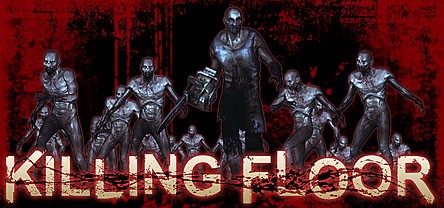
KILLING FLOOR


-  is a cooperative first-person shooter video game developed and published by Tripwire Interactive. It was originally released as an Unreal Tournament 2004 mod in 2005

Photo Credits to: https://steamcdn-a.akamaihd.net/steamcommunity/public/images/apps/1250/147ea3eaa2a9b38ac3c7115be720f9ecef05fb1b.jpg


Miyerkules, Setyembre 30, 2015

Quotes && Sayings xx Computaahrr.


Photo Credits to: http://www.funnydam.com/uploads/computer_quotes_quotes_images_484787072.jpg


Photo Credits to: http://wallpapersfeed.com/media/medium/Computers-Quotes-8cem.jpg


Photo Credits to: https://encrypted-tbn2.gstatic.com/images?q=tbn:ANd9GcQl-rXrddRQ1qJGPlb527G9UwRSV3kAejlgQMzW85wa1W6-snt98Q


Photo Credits to: http://thedailyquotes.com/wp-content/uploads/2013/07/faith-like-wi-fi-quote-picture-funny-quotes-sayings-pics.jpg


Photo Credits to: http://www.coolfunnyquotes.com/images/quotes/password-incorrect.jpg


Photo Credits to: https://encrypted-tbn2.gstatic.com/images?q=tbn:ANd9GcR_HfpqZl3esxh1xEbNUXgxazeOwTpcMGMbX1nbWoNEc0ADoZuX


Photo Credits to: http://www.coolnsmart.com/images/cns/history-tells-a-story.jpg


Photo Credits to: http://mylightwarrior.files.wordpress.com/2013/02/funny-images-funny-pictures-funny-kids-sayings-and-quotes-funny-sayings-favim-com-632006.jpg

Martes, Setyembre 29, 2015

My ICT Teacher #^___^

           
        Maam Katherine Karim Rhemi. 

  She's my computer teacher. She makes our discussion fun. She also makes us feel that  she is one of us. But when she says that its time to be serious and study time, we listens to her but sometimes we still continue what we are doing and just let her speak to herself. But after every lesson she will make sure that each one of us learned about her lesson. She may be not the best computer teacher, but I can say is she is a good teacher. :)  :) #EnglishYan #Orayt #RakNRoll \m/ 

Computer Overload xx


computer is a general-purpose device that can be programmed to carry out a set of arithmetic or logical operations automatically. Since a sequence of operations can be readily changed, the computer can solve more than one kind of problem.
Conventionally, a computer consists of at least one processing element, typically a central processing unit (CPU), and some form of memory. The processing element carries out arithmetic and logic operations, and a sequencing and control unit can change the order of operations in response to stored informationPeripheral devices allow information to be retrieved from an external source, and the result of operations saved and retrieved.
Mechanical analog computers started appearing in the first century and were later used in the medieval era for astronomical calculations. In World War II, mechanical analog computers were used for specialized military applications such as calculating torpedo aiming. During this time the first electronic digital computers were developed. Originally they were the size of a large room, consuming as much power as several hundred modern personal computers (PCs).[1]
Modern computers based on integrated circuits are millions to billions of times more capable than the early machines, and occupy a fraction of the space.[2] Computers are small enough to fit into mobile devices, and mobile computers can be powered by small batteries. Personal computers in their various forms are icons of the Information Age and are generally considered as "computers". However, the embedded computers found in many devices from MP3 players to fighter aircraft and from electronic toys to industrial robots are the most numerous.


History of Computer


 History Of Computer 


        The computer as we know it today had its beginning with a 19th century English mathematics professor name Charles Babbage.
He designed the Analytical Engine and it was this design that the basic framework of the computers of today are based on.


     Generally speaking, computers can be classified into three generations. Each generation lasted for a certain period of
time,and each gave us either a new and improved computer or an improvement to the existing computer.


        First generation: 1937 – 1946 - In 1937 the first electronic digital computer was built by Dr. John V. Atanasoff and Clifford Berry. It was called the Atanasoff-Berry Computer (ABC). In 1943 an electronic computer name the Colossus was built for the military. Other developments continued until in 1946 the first general– purpose digital computer, the Electronic Numerical Integrator and Computer (ENIAC) was built. It is said that this computer weighed 30 tons, and had 18,000 vacuum tubes which was used for processing. When this computer was turned on for the first time lights dim in sections of Philadelphia. Computers of this generation could only perform single task, and they had no operating system. 

        Second generation: 1947 – 1962 - This generation of computers used transistors instead of vacuum tubes which were more reliable. In 1951 the first computer for commercial use was introduced to the public; the Universal Automatic Computer (UNIVAC 1). In 1953 the International Business Machine (IBM) 650 and 700 series computers made their mark in the computer world. During this generation of computers over 100 computer programming languages were developed, computers had memory and operating systems. Storage media such as tape and disk were in use also were printers for output.
Third generation: 1963 - present - The invention of integrated circuit brought us the third generation of computers. With this invention computers became smaller, more powerful more reliable and they are able to run many different programs at the same time. In1980 Microsoft Disk Operating System (MS-Dos) was born and in 1981 IBM introduced the personal computer (PC) for home and office use. Three years later Apple gave us the Macintosh computer with its icon driven interface and the 90s gave us Windows operating system. 

         As a result of the various improvements to the development of the computer we have seen the computer being used in all areas of life. It is a very useful tool that will continue to experience new development as time passes.